
Stop treating guilt like proof that you care
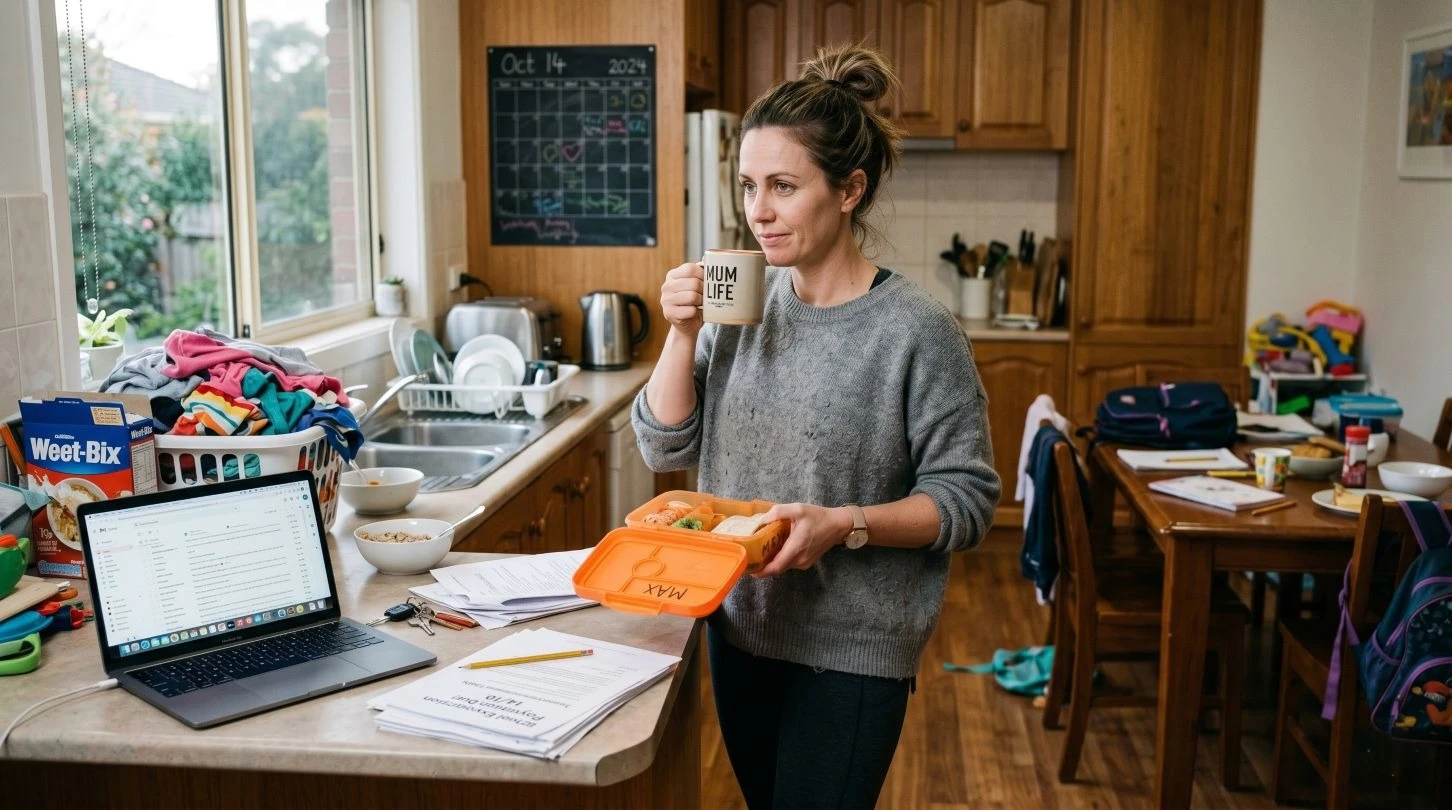
I see this all the time. A parent, usually running on bad sleep and cold coffee, tells me they feel guilty because they can’t do everything themselves. Work properly. Parent properly. Keep the house decent. Reply to messages. Book the dentist. Remember library day. Cook something green. Smile while doing it.
That guilt feels noble. It isn’t.
Most of the time, guilt is just a lagging indicator that your load is unrealistic. That’s it. It’s not a sign you’re failing. It’s a sign the maths doesn’t work.
I learned this the hard way during a stretch when I was trying to keep too many plates spinning at once. I was helping families all day, then going home and acting like I should also be the world’s best organiser, cleaner, meal planner and emotional support unit. I wasn’t virtuous. I was fried. My patience dropped, my standards got weird, and I started feeling bad about things no sane person could actually sustain.
If you’re trying to do the work of three adults with the energy of one tired human, guilt is predictable. Not profound. Predictable.
Name the real problem
People say, “I just need to manage my time better.” Sometimes that’s true. Often it’s rubbish.
The real problem is usually one of these:
- You have too many responsibilities for the hours available.
- You’re holding yourself to a fantasy standard.
- You don’t ask for help until you’re already half-broken.
- You think doing less in one area means you care less overall.
That last one causes a lot of damage.
A clean house does not equal good parenting. Homemade lunches every day do not equal good parenting. Being constantly available does not equal good parenting. A regulated adult who can think straight and respond calmly? That matters far more.
And yes, there’s actual data behind the pressure people are carrying. According to the Australian Bureau of Statistics’ Time Use Survey, women still do substantially more unpaid domestic work and care than men on average, even when paid work is also in the mix. So if you feel stretched, that’s not because you’re soft. It’s because many households still run on uneven labour and silent expectations.
Cut the jobs that don’t deserve your guilt
Here’s a rule I use with clients. If a task can be done badly without real harm, stop giving it premium emotional energy.
That includes:
- Laundry that sits unfolded for a day or three.
- Dinner that comes from the freezer.
- Dust on the skirting boards.
- Gift bags bought on the way to the party.
- A school event you miss because your life is not a magic trick.
I’m not saying lower every standard until chaos takes over. I’m saying stop acting like every task has moral weight. It doesn’t.
Ask yourself one blunt question: if I dropped this ball, what would actually happen?
Not your imagined catastrophe. The real one.
Usually the answer is pretty ordinary. Someone wears mismatched socks. You order takeaway. The world keeps turning. No one from Canberra arrives to revoke your parenting licence.
Build support before you hit the wall
The best time to set up help is before the meltdown, not after. Yet most people wait until they’re snapping at everyone, losing sleep, or crying in the car park at Woolies. I wish I were exaggerating.
Practical support works better than vague encouragement. “Let me know if you need anything” sounds nice but often goes nowhere. Real help has a shape to it.
That might mean using a Support at home package to take pressure off the daily grind if you’re caring for an older family member or juggling care needs in the household. When support is formalised, people stop relying on heroic effort and start building something sustainable. I’ve seen families go from constant crisis mode to something much calmer once basic tasks were shared properly.
You do not get extra points for struggling in private.
And no, outsourcing one part of life does not mean you’re lazy. It means you understand capacity. Big difference.
Stop confusing presence with performance

This one stings a bit, because plenty of good people fall into it.
They think being a good parent or carer means always being present, always available, always doing. But if your version of “present” is being physically there while mentally shattered, short-tempered, and running on fumes, that’s not the gold standard you think it is.
Kids don’t need a martyr. They need steadiness.
The same goes for partners, ageing parents, and frankly anyone you live with. If doing it all turns you into someone brittle and resentful, then doing it all is too expensive.
The last time I had to check myself on this, I realised I’d been confusing effort with effectiveness. I was doing heaps. I was helping very little. That’s a brutal thing to admit, but useful. Once I cut the unnecessary jobs and protected the important ones, things improved fast. Better conversations. Less snapping. Fewer stupid arguments over whose turn it was to deal with the bin.
Very glamorous stuff.
Use childcare without apologising for it
I’ll say this plainly. Good childcare is not a failure of parenting. It is often what makes stable parenting possible.
For families in south-east Queensland, I’ve seen Morayfield childcare services make a real difference when routines are fragile and parents are stretched thin. Reliable care gives children structure, social development, and predictability. It also gives adults space to work, recover, think clearly, and function like humans instead of emergency response units.
That matters.
A lot of parents carry guilt because they think if they were coping “properly”, they wouldn’t need outside care. Nonsense. Plenty of capable, loving, switched-on parents use childcare because modern life is full, expensive, and not designed around one adult doing everything.
If anything, choosing solid childcare can be a sign of good judgement. You looked at the load and made a sensible call. Imagine that.
Say the quiet bit out loud at home
If you live with other adults, don’t keep hinting. Say it clearly.
Try this:
- “The current split isn’t working.”
- “I’m carrying too much of the invisible load.”
- “I need you to do your own tasks, not wait for instructions.”
- “We are not going to solve this by becoming more efficient.”
That last line tends to land.
Invisible load is the killer. Not just doing the jobs, but remembering them, planning them, chasing them, and noticing when they haven’t been done. In my experience, many households improve the moment the planning work becomes visible. Put it on a shared calendar. Write the task list down. Assign ownership. Full ownership. Not “helping”, actual responsibility.
Because if one person is the project manager for everyone else’s contributions, they’re still overloaded.
Replace guilt with a decision
You won’t think your way out of guilt. You need a decision that changes the conditions.
Pick one:
- Drop one non-essential task this week.
- Ask one person for one specific form of help.
- Pay for one service that buys back time.
- Have one uncomfortable conversation at home.
- Stop doing one job that belongs to another capable adult.
That’s how this shifts. Not through positive affirmations. Not through pretending you can meditate your way out of an impossible workload.
Through decisions.
And if you still feel guilty after making a sensible change? Fine. Feel it, then carry on anyway. Feelings aren’t always instructions. Sometimes they’re just noise made by old expectations that no longer fit your life.
Leave a Reply