
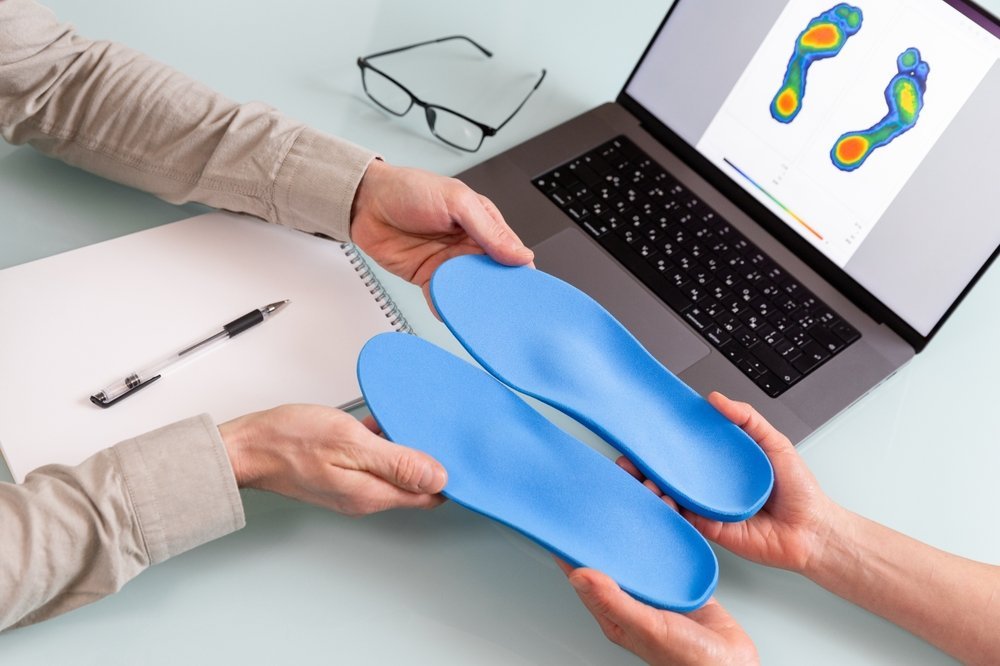
Orthotics are specialized shoe inserts created to correct foot problems and modify how you walk, but they do much more than simply cushion your steps. While generic store-bought inserts offer some benefits, they lack the specific fit needed to address unique biomechanical issues experienced by many individuals. Custom orthotics are tailor-made to fit an individual’s feet, and they can be designed to specifically address unique needs. Here is more information about custom orthotics and what they can do:
Defining Custom Orthotics
Custom orthotics are prescription medical devices made specifically to fit the unique contours of your feet. Unlike over-the-counter inserts, which are a general solution, custom inserts are crafted based on a precise 3D map or cast of your foot to correct specific irregularities. Custom shoe inserts can enhance shock absorption, and this reduces stress on the foot. These features help improve overall alignment and provide pain relief.
Connecting Foot Health and Posture
The alignment of your feet is integral for correct posture. When your feet are misaligned, it triggers a chain reaction that travels up your legs; this affects your knees, hips, and lower back. Correcting these foundational issues can alleviate pain in other areas of the body that you might not immediately associate with your feet.
Improving Bodily Alignment and Comfort
Custom orthotics function by physically altering the angle at which your foot strikes the ground. Inserts reposition the foot into a neutral alignment, and this reduces the strain on the feet and their supporting structures. This correction helps to normalize your gait.
Beyond simple alignment, these devices redistribute pressure away from painful hot spots. When individuals have conditions like flat feet or high arches, the insert fills the gaps and supports the foot structure to prevent collapse or excessive strain. The result is often improved function in the foot and ankle; this improvement may enable you to stand and walk with greater ease.
Recognizing Signs and Symptoms
You might assume that you only need medical inserts if you have severe foot pain. There are signs that may indicate a need for correction. Examine your shoes; if you notice consistent uneven wear on the soles, it suggests you have an irregular weight distribution or gait. Additionally, persistent tiredness in your feet after a long day can be a warning sign that your muscles are working too hard to compensate for poor mechanics.
Specific conditions can respond very well to this type of treatment. If you suffer from any of the following issues, speak with a specialist:
- Heel pain or plantar fasciitis
- Bunions and hammertoes
- Shin splints or leg cramps
- Chronic lower back or knee pain
- Flat feet or high arches
These devices may be beneficial for the above reasons, and they can help with diabetic foot care. Because they protect and cushion the feet, inserts are a protective measure for those with compromised sensation or circulation. Addressing foot issues early can prevent minor annoyances from becoming major mobility limitations.
Learn More About Custom Orthotics
Taking care of your feet is one factor in maintaining an active, pain-free lifestyle. Custom orthotics offer a targeted solution to correct biomechanical faults and improve posture; they may also alleviate chronic discomfort. If you want to learn more about custom orthotics and what they can do, consult a foot specialist near you.
Leave a Reply