
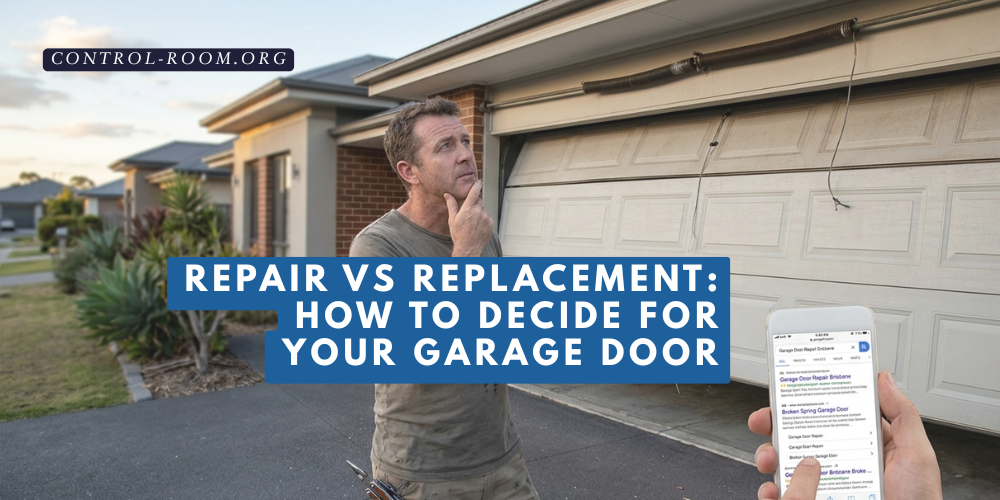
Your garage door makes a weird noise, and you’re standing in the driveway trying to decide if it’s worth fixing or if you need a whole new door. Most homeowners face this exact moment when their garage door starts acting up, and the answer isn’t always obvious.
At Control Room, we’ve handled thousands of garage door repair calls across Brisbane over the past decade. So we know exactly how to spot the difference between a quick fix and a full replacement job.
This guide breaks down repair costs versus replacement prices, shows you the warning signs that mean it’s time for a new install, and covers everything from emergency repairs to keeping your own garage door in top condition.
By the end, you’ll know exactly whether your garage door needs a simple fix or a complete upgrade.
What’s Actually Wrong with Your Garage Door?
Most garage door problems fall into three categories: broken springs and cables, faulty automatic openers, or damaged tracks and tilt door components. Once you know which one’s affecting your door, you’ll understand whether you need a quick fix or something more serious.
Here’s the breakdown:
- Broken Springs and Cable Issues
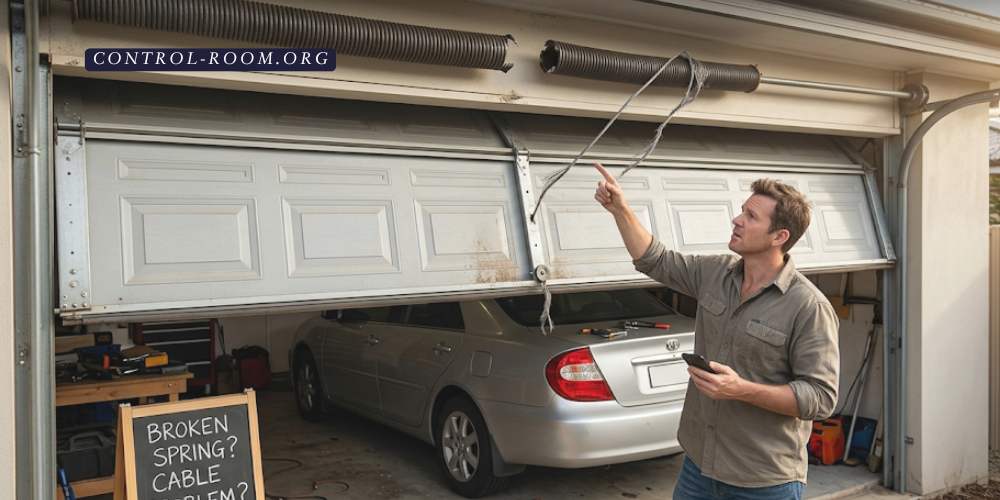
Springs snap after roughly 10,000 cycles and leave your garage door stuck halfway or jammed in place. Most residential doors go through about 1,500 cycles per year, so frequent use wears springs out quickly. If your family’s in and out of the garage multiple times daily, you’ll hit that limit sooner.
But springs aren’t your only concern here. Frayed cables cause uneven lifting, which makes one side drop lower than the other during operation. We’ve seen homeowners ignore worn cables, thinking they’re fine, then the cable snaps and the door crashes down on their car.
- Automatic Garage Door Opener Problems
Automatic garage door openers fail when motors burn out, gears strip, or safety sensors stop working properly. The whole system relies on these parts talking to each other.
Beyond the motor itself, sensors cause constant headaches. Remote sensors misalign easily, causing the door to reverse randomly or refuse to close. Think about your typical morning. You press the remote in your driveway in North Lakes, nothing happens, and now you’re wrestling with a broken garage door while running late.
Keep in Mind: Garage door opener repairs run $150-350, but units over 15 years old often need full motor replacement since parts aren’t available anymore.
- Tilt Doors and Track Damage
What’s causing that awful grinding noise when your garage door opens? Usually, it’s bent or blocked tracks.
Bent tracks from car bumps cause doors to stick, grind, or jump off the roller system mid-cycle. When tracks bend, the rollers can’t move smoothly. The door binds up, putting extra stress on cables and springs until other components start failing too.
Our humid climate accelerates another issue. Tilt door hinges rust out in Brisbane’s humidity, which makes sections sag and creates gaps around the frame. So your garage becomes exposed to weather and potential break-ins.
Repair Costs vs Replacement: The Real Numbers
Knowing the exact price helps you make smarter decisions about whether you should go for repair or replacement. So get the breakdown from the table below:
| Issue | Repair Cost | When to Repair | When to Replace |
|---|---|---|---|
| Broken springs | $200-$400 | Door under 10 years old | Multiple spring failures within 2 years |
| Garage door opener problems | $150-$350 | Motor works, just needs sensors | Unit over 15 years, parts unavailable |
| Bent tracks | $100-$250 | Minor dents, door still operates | Severely twisted, safety risk |
| Damaged panels | $200-$600 per panel | Single panel, matching models available | Multiple panels, discontinued models |
| Full door replacement | $2,000-$4,500 | N/A | Door over 15 years with frequent repairs |
Bottom Line: Door repair makes sense when you’re fixing one component on a relatively new system. But go for replacement when multiple components fail. The right decision comes down to your door’s age, repair frequency, and total cost.
After installing hundreds of panel lift doors across Brisbane, we’ve learned that homeowners who track their repair history make better decisions. So write down what breaks and when. If you’re calling for professional service every 6-12 months, those repairs are eating into what could’ve been a one-time installation cost.
At the end of the day, affordable doesn’t mean cheap repairs that keep failing. You deserve honest advice about whether fixing your garage door actually saves money or just delays the inevitable. A qualified technician should tell you straight up when replacement beats repair, even if it means a bigger job upfront.
But cost isn’t the only factor. Your door’s age counts just as much when you’re trying to figure out the right call.
Checking Your Door’s Age Before You Decide
Most panel lift garage doors last 15-20 years with proper maintenance before they need replacing. But neglected ones fail around the 10-year mark. Your residential garage door’s life depends on how often you use it and whether you keep up with basic care.
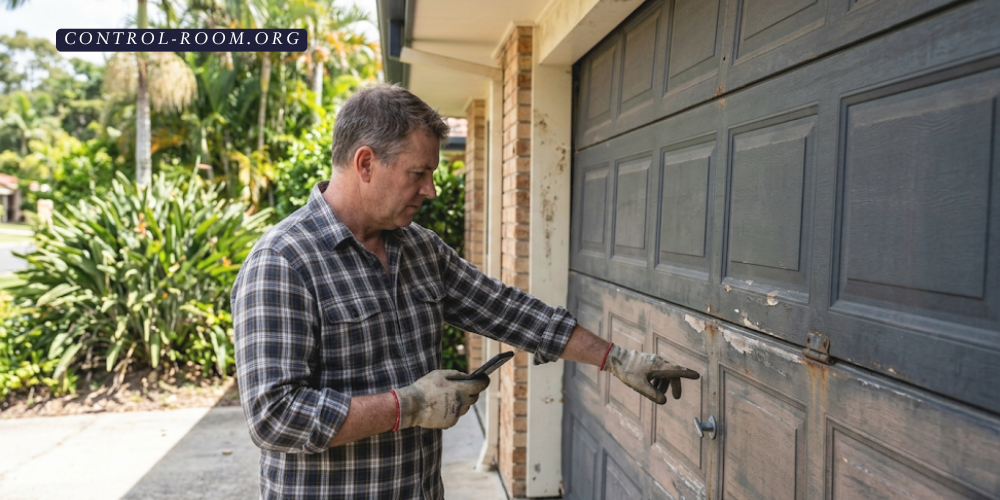
If your door’s past 15 years and needs multiple repairs, replacement actually costs less long-term. You’re throwing money at an old system that’s simply reached the end of its useful life. Plus, newer models come with better safety features and better safety features and smoother operation than what you’ve got now.
Material choice affects the lifespan, too. Timber models look great when you first install them, but humidity and rain take their toll. Moisture soaks into the wood and causes warping, cracking, and rot over time. In contrast, steel resists water damage better and needs less ongoing work to stay in decent shape, making it the more practical choice for Brisbane’s climate.
Can You Get Away with Just Fixing It?
Single-component failures like one broken spring or a faulty sensor justify repairs every time, especially on newer doors. When your garage door needs that one fix to get back to reliable operation, and the rest of the system’s still solid, paying for professional repairs makes more sense.
Now consider the door’s age. Doors under 10 years old with solid frames and smooth operation should always get repaired first. Based on our experience, newer systems respond well to targeted fixes. After all, the components are still available, the frame’s structurally sound, and an efficient repair job gets you years more use. You’re not throwing money at a failing system when the door’s relatively young.
But there’s a warning sign to watch for. Multiple problems happening within months of each other mean the whole system’s breaking down together. One repair might fix today’s issue, but if you’re calling for door repair again three months later, that’s your garage door telling you it’s done.
Warning Signs You Need Full Replacement
Once you know repair makes sense in some cases, it’s time to spot the situations where it doesn’t. Watch for these warning signs:
- Repairs Every 6-12 Months: You’re scheduling professional service more often than your car’s oil changes, and each visit costs money you could’ve put toward a new door. That pattern means worn components throughout the system, not just one unlucky part.
- Visible Rust, Rot, or Structural Damage: We’ve seen homes in Wynnum and Ipswich where corroded frames create security risks. The metal’s integrity is gone, or the timber’s rotted through. So patching those issues won’t hold long-term.
- Door Struggles to Lift Smoothly Even After Repairs: Your residential garage door should glide up and down without catching or hesitating. When it still performs badly after a qualified technician has worked on it, the problem’s deeper than any single component.
- Outdated Systems Without Modern Safety Features: Older models from 15-20 years ago don’t have auto-reverse sensors that stop when something’s in the way. If your door doesn’t protect kids and pets, that’s a family safety issue you can’t ignore.
- Rising Energy Bills From Air Leaks: Old doors leak air around warped panels and deteriorated weather seals. You’re heating or cooling your garage constantly, and that conditioned air escapes through gaps that an efficient modern door wouldn’t have. The wasted energy costs you more night after night.
Sometimes the decision gets forced on you before scheduled maintenance even happens.
What About Emergency Garage Door Repairs?
Emergency garage door repairs cover situations where your door’s stuck, broken, or creating an immediate security risk that can’t wait until tomorrow.
Some situations demand urgent action. Doors stuck open overnight need immediate attention since they’re inviting burglars straight into your home. Most break-ins happen because of opportunity, not planning. And a jammed door at night gives thieves exactly that opening. Every hour your garage stays open puts your family and belongings at greater risk.
Broken springs or cables hanging loose create a different kind of danger. These components can snap violently and cause serious injuries if you try handling them yourself. That’s why you need a qualified technician who knows how to safely replace the broken parts.
While emergency callouts cost $100-200 extra, there’s a reason for that premium. You’re paying for quick service outside regular business hours because technicians drop everything to get to your job fast.
Worth Noting: The extra emergency service cost prevents further damage and keeps your property secure immediately, rather than leaving you exposed for days waiting for a standard appointment.
Getting Your Door Back to Smooth Operation
Once you’ve got your door working again, maintaining it that way takes some effort on your part. Follow these maintenance steps to keep it reliable:
- Regular Lubrication: Your garage door has multiple moving parts that need proper lubrication. A quick spray of silicone-based lubricant takes 10 minutes and stops metal-on-metal wear. So lubricate hinges, rollers, and tracks every 3 months to prevent grinding and keep things running longer.
- Monthly Sensor Tests: Test auto-reverse safety sensors monthly by placing a brick under the door to ensure it stops properly. Place a brick in the door’s path and watch it reverse. If it doesn’t, your sensors need adjustment by a professional.
- Professional Inspections: A qualified technician spots worn cables, loose bolts, and misaligned tracks during routine visits. These small fixes cost far less than waiting until components fail.
All these routines combined give you more years of reliable service from your garage door.
Time to Make the Right Decision
Your garage door’s age, the repair frequency, and the total cost all point toward the right decision. If you’re looking at multiple failures on a door past 15 years, replacement makes more financial sense. But if you’ve got a newer door with one broken component, professional repairs get you back on track affordably.
Control Room offers honest advice about whether your garage door needs a simple fix or a complete installation. Contact us today to schedule an inspection and get expert recommendations.
Leave a Reply