
Over a decade ago, Harvard Medical School reported a 500% increase in US testosterone prescription. Such patterns have not ended. In fact, with over 5% of men aged between 30 and 79 deficient in testosterone, treatments are still necessary today.
But is increase testosterone simple? Or does it require careful oversight?
Well, to put it simply, regular monitoring is crucial. Higher testosterone levels influence a lot. Energy. Strength. Mood. In fact, your overall health should improve. And sure, this does sound like good news, but they can also affect other parts of the body.
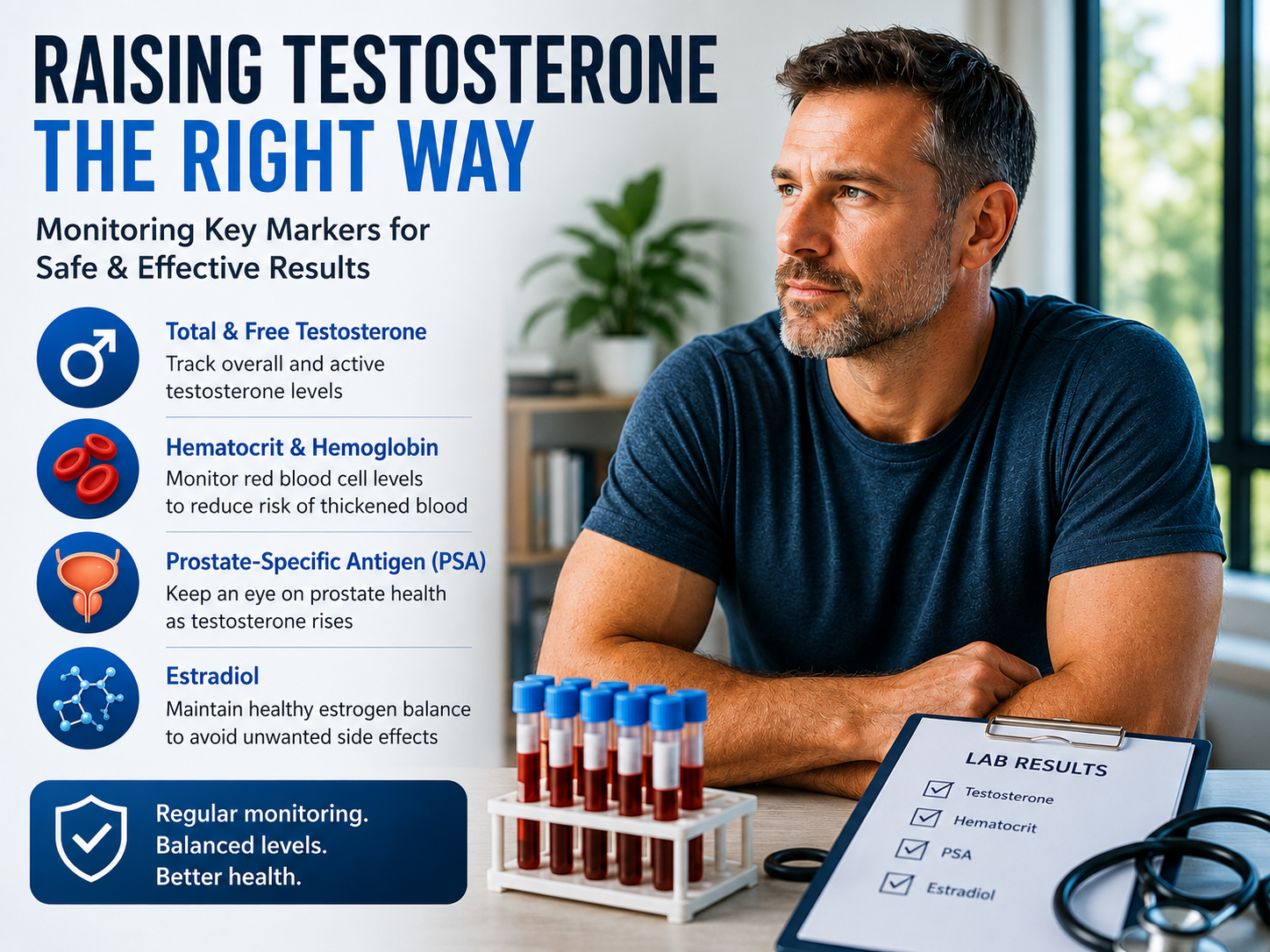
Whether someone is making lifestyle changes, using supplements, or trying options – like enclomiphene for testosterone – keeping track of certain health markers is a must. This helps make sure everything stays balanced and safe.
Total and Free Testosterone
One of the first things doctors monitor is total and free testosterone levels. It is quite straightforward, to be honest. As you would imagine, total testosterone will show the overall amount of testosterone in the blood. Free testosterone, on the other hand, will only show the amount that is active and available for the body to use.
Checking both levels is vital. Doing so helps determine if testosterone production is actually improving. It also prevents testosterone levels from becoming too high. Testosterone levels require a delicate balance. Too high, and it could cause unwanted side effects – primarily acne, mood changes, or sleep problems.
Hematocrit and Hemoglobin
Testosterone has numerous impacts on the body. For one, the number of red blood cells in your body will increase. This happens as testosterone increases. Because of this, hematocrit and hemoglobin levels must be looked at.
For the former, a hematocrit (Hct) test is needed. This test measures the amount of blood that is made up of red blood cells. Then there’s hemoglobin (Hb or Hgb), which measures the protein that carries oxygen through the body. If these levels become too high, the blood thickens.
If the blood does thicken, there are rather serious health risks. You’ll have a greater chance of high blood pressure, blood clots, and/or heart-related problems. Fortunately, regular blood tests help catch these changes early on. Adjustments can then be made if necessary.
Prostate-Specific Antigen
Prostate-specific antigen – or PSA – is another important marker of interest. PSA is a protein made by the prostate gland. A high level could indicate cancer. For obvious reasons, this must be monitored by your doctor.
However, higher PSA levels won’t always mean there is a serious problem. It will require follow-up tests. It could be linked to prostate enlargement or inflammation. So, monitoring PSA cannot be forgotten. It enables doctors keep an eye on prostate health as testosterone levels increase.
Men over the age of 40 or those with a family history of prostate issues are most at risk. They should pay close attention to regular PSA testing.
Estradiol
Estradiol is a form – the primary form, actually – of estrogen. Just like in women, it’s also vital for men’s health. When testosterone levels rise, some of this might be converted into estradiol.
Many aspects of men’s health are supported by balanced estradiol levels. Bone health. Mood. Libido. These levels could become too high. If this happens, breast tenderness, mood swings, or water retention as possible. Levels that are too low, though, can lead to fatigue, joint pain, or low sex drive.
Monitoring estradiol helps maintain proper hormone balance and reduces the chance of side effects.
To conclude, increasing testosterone production can provide many benefits. It should always be done carefully, though. Monitoring the markers listed above will ensure the body stays healthy during this process.
Leave a Reply